

Sandal Safety: 7 Tips for Choosing Supportive Summer Footwear
Sandal Safety: 7 Tips for Choosing Supportive Summer Footwear

- AFCN Foot Care Team
Sandal Safety: 7 Tips for Choosing Supportive Summer Footwear
Summer is a time for outdoor activities, vacations, walks, and enjoying warmer weather. For many people, sandals become the footwear of choice during the season. While sandals can provide comfort and breathability, not all styles offer the support needed to help maintain foot health.
Choosing supportive summer footwear is especially important for older adults, people living with diabetes, individuals with foot pain, and anyone who spends long periods walking or standing. The right sandal can help improve comfort and reduce the risk of common foot problems, while the wrong choice may contribute to discomfort, instability, or injury.
Understanding what makes a sandal supportive can help you make informed footwear decisions throughout the summer months.
Why Supportive Summer Footwear Matters
Your feet provide the foundation for movement and balance. Footwear plays an important role in distributing pressure, supporting natural foot mechanics, and helping reduce strain on joints and soft tissues.
During summer, many people switch from supportive shoes to sandals that offer little structure. Flat flip-flops, unsupportive slides, and thin-soled sandals may feel comfortable initially but can place additional stress on the feet and lower limbs.
Supportive summer footwear may help:
- Improve comfort during walking
- Enhance stability and balance
- Reduce pressure on sensitive areas
- Support natural foot alignment
- Help prevent excessive fatigue
- Accommodate certain foot conditions
For individuals with diabetes, circulation concerns, mobility challenges, or existing foot discomfort, footwear selection can be particularly important.
What Makes a Sandal Supportive?
Not all sandals are created equally. While style preferences vary, supportive sandals often share several important features.
Arch Support
A supportive sandal should provide appropriate arch support to help distribute weight evenly across the foot.
Good arch support may:
- Reduce foot fatigue
- Improve overall comfort
- Help maintain proper alignment
- Provide better stability during walking
People with flat feet, high arches, or certain foot conditions may especially benefit from footwear that offers structured support.
Cushioned Sole
Cushioning helps absorb impact while walking on hard surfaces.
Look for sandals with:
- Shock-absorbing midsoles
- Durable cushioning materials
- Adequate thickness under the heel and forefoot
Thin soles may provide minimal protection from ground impact.
Adjustable Straps
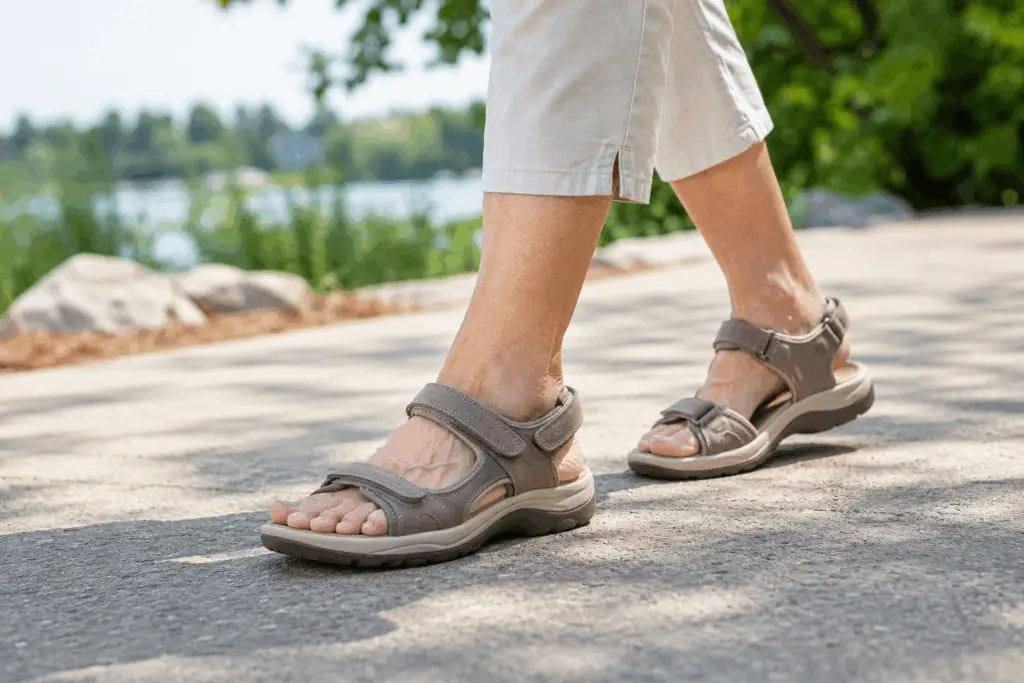
Adjustable straps can help create a more secure fit.
Common adjustment features include:
- Hook-and-loop closures
- Buckles
- Multiple strap adjustment points
A secure fit helps prevent excessive foot movement inside the sandal, which may reduce friction and instability.
Heel Stability
The heel area should help keep the foot positioned securely.
Features to consider include:
- Contoured heel cups
- Back straps
- Structured heel support
Backless sandals may be less stable for some individuals, particularly those who have balance concerns.
7 Sandal Safety Tips for Summer
1. Choose Sandals with Secure Straps
Sandals that stay firmly attached to the foot generally provide more stability than loose-fitting styles.
Secure straps can help:
- Reduce slipping
- Improve walking efficiency
- Lower the risk of trips and falls
A sandal should feel secure without being overly tight.
2. Avoid Completely Flat Footbeds
While flat sandals may be fashionable, they often provide limited support.
Look for footwear that includes:
- Contoured footbeds
- Arch support
- Shock absorption
These features may contribute to improved comfort during prolonged wear.
3. Consider Sole Traction
Summer activities often involve varied walking surfaces, including sidewalks, decks, parks, and outdoor events.
Choose sandals with:
- Non-slip tread patterns
- Durable outsoles
- Good grip on dry and wet surfaces
Proper traction can support stability and reduce slipping risks.
4. Check the Fit Carefully
A sandal that is too large or too small can create discomfort and increase pressure points.
When evaluating fit:
| Fit Check | What to Look For |
|---|---|
| Length | Toes should not hang over the edge |
| Width | Foot should not spill over the sides |
| Heel | Heel should sit securely in place |
| Straps | Snug but not restrictive |
Proper fit is an important component of footwear safety.
5. Replace Worn-Out Sandals
Even supportive sandals lose effectiveness over time.
Signs that sandals may need replacement include:
- Flattened cushioning
- Worn tread
- Broken straps
- Uneven sole wear
- Reduced comfort
Regular inspection can help identify footwear that is no longer providing adequate support.
6. Be Cautious with Flip-Flops
Flip-flops are popular during summer but may not be ideal for extended walking or standing.
Many flip-flop styles provide:
- Minimal arch support
- Limited cushioning
- Reduced stability
- Less foot protection
They may be appropriate for short-term use in certain settings but may not be the best option for all-day wear.
7. Prioritize Foot Health Conditions
People with specific foot concerns should pay extra attention to footwear choices.
This may include individuals with:
- Diabetes
- Arthritis
- Neuropathy
- Bunions
- Hammertoes
- Circulation concerns
Supportive footwear can be one part of an overall foot health strategy. If you have ongoing foot concerns, a qualified healthcare professional can help assess your needs.
Common Misconceptions About Summer Sandals
“If They’re Comfortable, They’re Supportive”
Comfort and support are not always the same thing.
A sandal may feel comfortable when first worn but still lack the structural features needed for prolonged use.
“Expensive Means Better”
Price alone does not determine support.
The most important factors are:
- Fit
- Construction quality
- Supportive features
- Suitability for your individual needs
“Sandals Don’t Need Maintenance”
Sandals experience wear just like athletic shoes.
Regularly inspecting footwear can help identify issues before they affect comfort or safety.
Summer Footwear and Foot Care Considerations
Warm weather can bring additional foot health challenges, including swelling, increased perspiration, and skin irritation.
Practical summer foot care tips include:
- Inspecting feet regularly
- Keeping feet clean and dry
- Wearing properly fitted footwear
- Replacing worn sandals when necessary
- Seeking professional assessment for persistent foot concerns
For older adults and individuals with diabetes, regular foot assessments may play an important role in maintaining overall foot health.
Supportive Footwear and Professional Foot Care
Footwear is only one component of maintaining healthy feet. Routine foot care, regular monitoring, and addressing concerns early may help support comfort and mobility.
Individuals who receive clinic foot care, home foot care, mobile foot care, or facility foot care services may benefit from discussing footwear choices with a qualified foot care professional during their appointments.
A foot care assessment can help identify factors that may influence footwear recommendations, including foot shape, pressure areas, mobility concerns, and existing foot conditions.
Key Takeaways
- Supportive sandals can help improve comfort, stability, and foot function during summer.
- Look for arch support, cushioning, secure straps, and good traction.
- Proper fit is essential for both comfort and safety.
- Flip-flops may not provide adequate support for extended walking.
- Worn-out sandals should be replaced when support features begin to deteriorate.
- People with diabetes, mobility concerns, or ongoing foot issues should pay particular attention to footwear choices.
Closing Thoughts
Summer footwear should balance comfort, function, and support. While sandals can be a practical choice during warmer months, selecting styles with appropriate support features may help promote comfort and stability throughout the season.
If you have ongoing foot concerns, pain, wounds, circulation issues, or diabetes-related foot changes, consider seeking assessment from a qualified healthcare professional who can provide guidance based on your individual needs.
FAQs
What features should I look for in a supportive sandal?
Look for arch support, cushioning, secure adjustable straps, a stable heel area, and slip-resistant soles.
Are flip-flops considered supportive footwear?
Many flip-flops provide limited support and may not be ideal for prolonged walking or standing.
Can supportive sandals help reduce foot fatigue?
Supportive footwear may help improve comfort and reduce strain during daily activities by providing cushioning and stability.
Why is proper sandal fit important?
A proper fit helps reduce friction, improves stability, and may lower the risk of discomfort or falls.
AFCN Foot Care Team
At our company, our primary focus is on delivering professional footcare and wellness treatments of the highest caliber, all infused with a compassionate touch. Our utmost aim is to surpass your expectations in every way possible.