

Protecting Your Feet at Pools and Public Showers: 5 Practical Tips
Protecting Your Feet at Pools and Public Showers: 5 Practical Tips

- AFCN Foot Care Team
Protecting Your Feet at Pools and Public Showers: 5 Practical Tips
Pools, change rooms, locker rooms, campground showers, and public shower areas are common places where feet are exposed to shared wet surfaces. These spaces can be helpful for recreation, exercise, travel, and community activities, but they can also create conditions where certain foot concerns are more likely to spread.
Protecting your feet at pools and public showers does not need to be complicated. A few simple habits can help support skin health, reduce exposure to shared surfaces, and make it easier to notice concerns early.
Public wet areas can be warm and moist, which may support fungal growth. Athlete’s foot, also called tinea pedis, is commonly linked with warm, damp environments and may spread through contaminated floors, towels, footwear, or shared surfaces. Plantar warts may also spread through direct or indirect contact, including contact with communal shower floors or change room surfaces.
This article explains five practical ways to protect your feet before and after visiting pools or public showers.
Why Foot Protection Matters in Public Wet Areas
The skin on your feet acts as a natural barrier. When that barrier is healthy, dry, and intact, it is better able to protect against irritation and environmental exposure. When skin is damp for long periods, cracked, blistered, or broken, it may become more vulnerable.
Common foot concerns associated with public wet environments can include:
- Itchy, peeling, or irritated skin
- Cracks between the toes
- Plantar warts
- Fungal nail concerns
- Blisters from wet or poorly fitting footwear
- Skin irritation from prolonged moisture
These concerns do not happen to everyone, and using a public pool or shower does not mean you will develop a foot problem. However, preventive habits are especially helpful for older adults, people with diabetes, people with circulation concerns, and anyone who has reduced sensation in their feet.
Protecting Your Feet at Pools and Public Showers
The goal is not to avoid public spaces altogether. The goal is to reduce unnecessary exposure and support healthy feet with practical, realistic habits.
1. Wear Protective Footwear
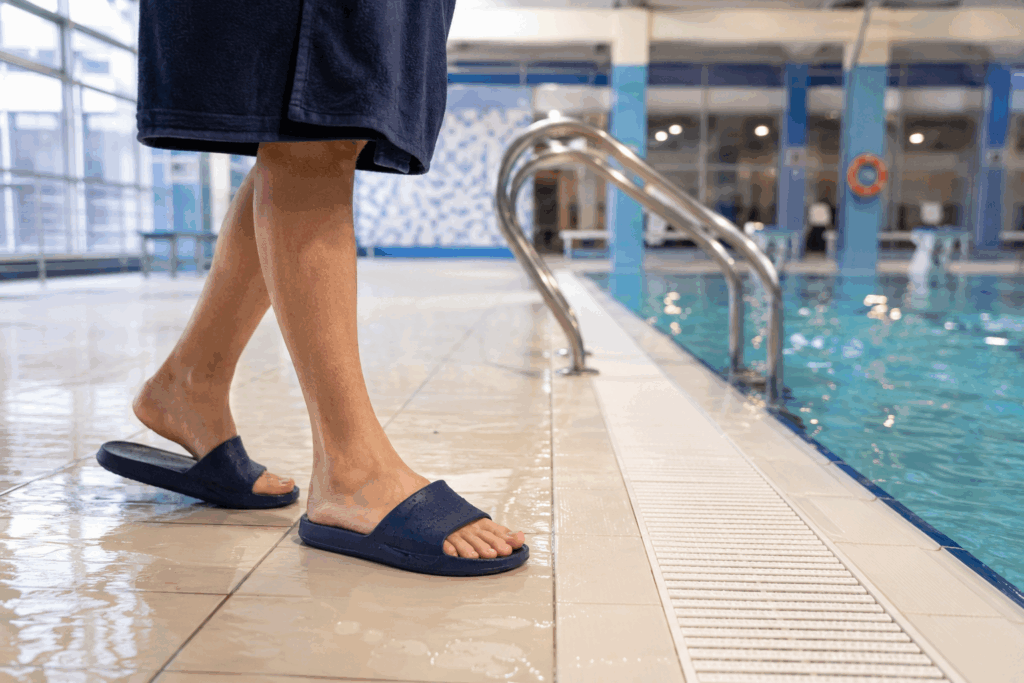
One of the easiest ways to protect your feet is to avoid walking barefoot on shared wet surfaces.
Consider wearing:
- Shower sandals
- Flip-flops with good grip
- Water shoes
- Pool shoes designed for wet surfaces
Protective footwear creates a simple barrier between your skin and the floor. This can be useful in public showers, locker rooms, pool decks, campground washrooms, hotel pool areas, and recreation centres.
Choose footwear that fits securely and has a non-slip sole. Loose sandals may increase the risk of tripping, while footwear without grip may be unsafe on wet tile.
2. Dry Your Feet Thoroughly
After swimming or showering, take time to dry your feet fully before putting on socks and shoes. Moisture can collect between the toes, around the nails, and along the soles of the feet.
Pay special attention to:
- Between each toe
- Around the toenails
- Under the ball of the foot
- Around the heel
- Any areas with callus, cracks, or dry skin
A separate clean towel for your feet can be helpful. Avoid sharing towels, socks, or footwear with others, as shared personal items may increase the chance of transferring microorganisms.
3. Change Out of Wet Footwear Promptly
Wet socks, damp shoes, and closed footwear can trap moisture around the feet. After using a pool or public shower, change into clean, dry socks and shoes as soon as possible.
A simple after-pool routine may look like this:
- Rinse your feet if needed.
- Dry your feet carefully, especially between the toes.
- Put on clean, dry socks.
- Choose breathable footwear when possible.
- Allow wet shoes or sandals to dry fully before wearing them again.
For people who visit pools, gyms, or recreation centres often, keeping an extra pair of dry socks in a bag can be a helpful habit.
4. Inspect Your Feet Regularly
Regular foot checks help you notice small changes before they become more uncomfortable or harder to manage.
After visiting a public pool or shower, look for:
- Redness
- Peeling or scaling skin
- Cracks between the toes
- Blisters
- New rough spots
- Changes in toenail colour or thickness
- Tender areas on the sole
- Wart-like spots or unusual growths
People with diabetes, reduced circulation, or reduced sensation should be especially careful with foot inspections. If it is difficult to see the bottoms of your feet, a mirror or help from a caregiver may be useful.
Seek assessment from a qualified healthcare professional if you notice wounds, signs of infection, persistent pain, spreading redness, drainage, swelling, or skin changes that do not improve.
5. Keep Your Skin Healthy
Healthy skin is one of the best forms of everyday foot protection. Dry, cracked skin may be more likely to split, especially around the heels or between toes.
General skin care habits include:
- Moisturizing dry skin on the tops and bottoms of the feet
- Avoiding moisturizer between the toes if that area stays damp
- Not picking at peeling skin
- Avoiding self-cutting of corns or calluses
- Wearing properly fitting footwear
- Keeping toenails trimmed safely and appropriately
If you have thick calluses, painful nails, fungal nail concerns, or difficulty managing foot care safely, professional foot care may be appropriate.
Special Considerations for Older Adults and People with Diabetes
Older adults and people with diabetes may need to take extra precautions because small skin changes can become more serious if they are not noticed early. Diabetes Canada recommends regular foot checks and attention to foot changes for people living with diabetes.
Extra caution is important if you have:
- Diabetes
- Reduced feeling in your feet
- Circulation concerns
- A history of foot wounds
- Mobility challenges
- Difficulty trimming nails safely
- Vision changes that make foot checks harder
Public pools can still be part of an active lifestyle, but foot protection should be part of the routine.
Common Misconceptions About Pool and Shower Foot Safety
“Chlorine means there is no foot health risk.”
Chlorine helps maintain pool water quality, but foot exposure often happens on surrounding surfaces such as pool decks, shower floors, locker rooms, and change rooms. Footwear is still helpful in these areas.
“Only athletes get athlete’s foot.”
Despite the name, athlete’s foot can affect people of many ages and activity levels. Warm, moist environments and shared surfaces can contribute to exposure.
“If my feet look fine, I do not need protection.”
Preventive habits are useful even when your feet look healthy. Wearing sandals, drying your feet, and checking your skin are simple ways to maintain foot health.
Professional Foot Care Support
A foot care nurse can help with general foot health education, nail care, skin care, callus concerns, and monitoring for changes that may need medical assessment.
Advanced Foot Care Nurse & Wellness Centre may support clients through clinic foot care, home foot care, mobile foot care, and facility foot care, depending on individual needs and service availability.
Professional care may be especially helpful for people who have difficulty reaching their feet, managing thick nails, monitoring skin changes, or safely maintaining foot hygiene.
Key Takeaways
- Wearing shower sandals or water shoes can help reduce direct contact with shared wet surfaces.
- Drying carefully between the toes is an important part of foot hygiene.
- Changing out of wet socks and shoes helps reduce prolonged moisture.
- Regular foot checks can help you notice skin or nail changes early.
- Healthy skin helps support the foot’s natural protective barrier.
- People with diabetes, reduced circulation, or reduced sensation should seek professional guidance for concerning foot changes.
Closing Statement
Protecting your feet at pools and public showers is about simple, consistent habits. Footwear, drying, clean socks, regular checks, and healthy skin care can all support better foot health.
This article is for general education only and does not replace assessment by a qualified healthcare professional. If you have pain, wounds, infection concerns, diabetes-related foot concerns, or changes that do not improve, seek appropriate professional care.
FAQs
Should I wear sandals in public showers?
Yes. Shower sandals or water shoes can help reduce direct contact between your feet and shared wet surfaces.
How do I protect my feet after swimming?
Dry your feet well, especially between the toes, and change into clean, dry socks and shoes after swimming.
Can public showers spread athlete’s foot?
Athlete’s foot can spread through contaminated surfaces, including damp public areas such as locker rooms and showers.
When should I seek professional foot care?
Seek professional care if you notice wounds, spreading redness, drainage, persistent pain, nail changes, or concerns related to diabetes or circulation.
AFCN Foot Care Team
At our company, our primary focus is on delivering professional footcare and wellness treatments of the highest caliber, all infused with a compassionate touch. Our utmost aim is to surpass your expectations in every way possible.