

Why Feet Swell More in Warm Weather
Why Feet Swell More in Warm Weather

- AFCN Foot Care Team
Why Feet Swell More in Warm Weather
Many people notice that their shoes feel tighter during the summer months. Rings may become difficult to remove, socks can leave deeper marks around the ankles, and feet may appear puffier than usual. While this can be uncomfortable, mild swelling during warm weather is often a normal response to heat.
Understanding why feet swell more in warm weather can help you manage symptoms and recognize when swelling may require professional assessment. For many Canadians, warmer temperatures bring more outdoor activities, travel, walking, and standing, all of which can influence how the body manages fluid.
Why Do Feet Swell More in Warm Weather?
The body’s circulatory system helps regulate temperature. When temperatures rise, blood vessels near the surface of the skin expand in a process called vasodilation.
This natural response allows heat to leave the body more efficiently. However, when blood vessels expand, fluid can sometimes move from the blood vessels into surrounding tissues. Gravity can cause some of this fluid to collect in the feet and ankles, leading to mild swelling.
Because the feet are the lowest part of the body when standing or sitting, they are often one of the first areas where swelling becomes noticeable.
Understanding Warm Weather Foot Swelling
Warm weather foot swelling is often temporary and improves when temperatures cool or when the feet are elevated.
Common characteristics include:
- Mild puffiness in the feet or ankles
- Shoes feeling tighter than usual
- Sock indentations around the ankles
- Swelling that improves overnight
- Swelling that decreases after resting with feet elevated
For many people, occasional mild swelling during hot weather is not necessarily a sign of a serious problem.
Common Factors That Can Make Swelling Worse
Several factors may contribute to increased foot swelling during warm weather.
Prolonged Standing
Standing for long periods can make it harder for blood and fluid to move efficiently back toward the heart.
People who work in:
- Retail
- Healthcare
- Manufacturing
- Hospitality
- Education
may notice increased swelling during hot weather, especially after a long shift.
Prolonged Sitting
Sitting for extended periods can also affect circulation.
Examples include:
- Long car rides
- Air travel
- Desk work
- Extended periods of inactivity
Regular movement helps support healthy circulation and may reduce fluid buildup.
Increased Outdoor Activity
Summer often brings:
- Walking
- Gardening
- Festivals
- Sporting events
- Vacations
While physical activity supports overall health, spending long hours on your feet can contribute to temporary swelling, particularly in hot conditions.
Footwear Choices
Warm weather often means sandals, flip-flops, and lightweight shoes.
Poorly fitting footwear may:
- Restrict circulation
- Increase foot fatigue
- Contribute to discomfort when swelling occurs
Footwear should provide adequate support and allow room for natural changes in foot size throughout the day.
Hydration Changes
Some people mistakenly drink less water because they worry about swelling. In reality, dehydration may sometimes encourage the body to retain fluid.
Maintaining adequate hydration supports normal body functions and temperature regulation.
Who May Be More Likely to Experience Swollen Feet?
Certain individuals may notice swelling more frequently.
These may include:
| Factor | Why It May Contribute |
|---|---|
| Older age | Circulation changes may occur with age |
| Pregnancy | Increased fluid volume and hormonal changes |
| Obesity | Greater pressure on circulation |
| Mobility limitations | Reduced muscle activity can affect circulation |
| Chronic health conditions | Some conditions may affect fluid balance |
Swelling can have many causes, which is why persistent or unusual swelling should be discussed with a qualified healthcare professional.
Practical Ways to Help Manage Mild Warm Weather Swelling
If swelling appears to be related to heat and activity, several simple measures may help improve comfort.
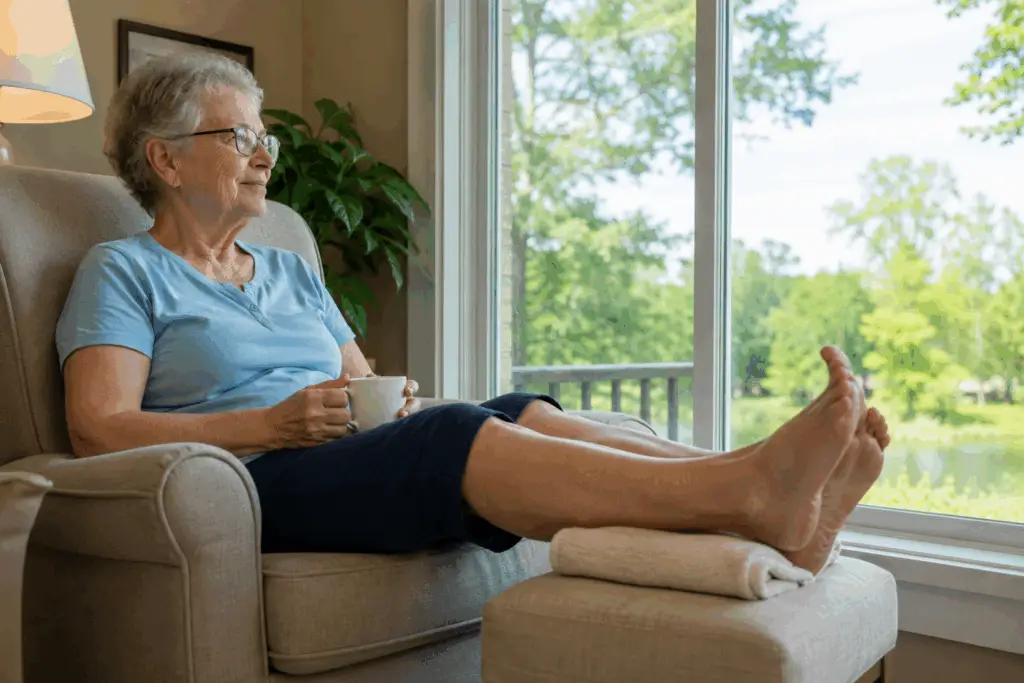
Elevate Your Feet
Raising your feet above heart level when resting may help encourage fluid movement away from the lower legs and feet.
Stay Active
Movement helps support circulation.
Consider:
- Short walks
- Gentle stretching
- Ankle exercises
- Regular movement breaks
Even a few minutes of movement every hour can be beneficial.
Wear Supportive Footwear
Choose shoes that:
- Fit properly
- Allow room for natural swelling
- Provide adequate support
- Reduce pressure points
Footwear that becomes excessively tight may contribute to discomfort.
Stay Hydrated
Drinking adequate fluids throughout the day supports overall health and may help the body regulate fluid balance more effectively.
Consider Compression Garments
For some individuals, compression socks may be recommended by a healthcare professional to support circulation and reduce swelling.
Compression garments are not appropriate for everyone, so professional guidance may be beneficial.
Common Misconceptions About Swollen Feet
“Swollen feet are always a normal part of summer.”
While mild swelling can occur in hot weather, persistent, worsening, or unexplained swelling should not automatically be dismissed as seasonal.
“Drinking less water helps reduce swelling.”
Adequate hydration supports normal body functions. Restricting fluids without medical advice may not improve swelling and could contribute to dehydration.
“Only older adults experience foot swelling.”
People of many ages can develop temporary swelling during hot weather, especially after prolonged standing, travel, or outdoor activity.
When Should You Seek Professional Assessment?
While mild swelling may be common during warm weather, some situations warrant professional evaluation.
Seek medical assessment if swelling is:
- Sudden
- Severe
- Painful
- Occurring in only one foot or leg
- Associated with redness or warmth
- Accompanied by shortness of breath
- Associated with wounds or skin breakdown
- Persistent despite self-care measures
People with diabetes, circulation concerns, or a history of foot ulcers should also monitor swelling carefully and seek guidance when concerns arise.
Professional Foot Care Considerations
A foot care nurse may help monitor skin health, identify changes that require further assessment, and provide education about maintaining healthy feet during warmer months.
Depending on individual circumstances, support may be available through:
- Clinic Foot Care
- Home Foot Care
- Mobile Foot Care
- Facility Foot Care
Maintaining healthy skin, properly fitting footwear, and regular foot monitoring can be particularly important for older adults and those with chronic health conditions.
Key Takeaways
- Feet swell more in warm weather because blood vessels expand to help regulate body temperature.
- Gravity can cause fluid to collect in the feet and ankles.
- Prolonged standing, sitting, travel, and heat can increase swelling.
- Elevation, movement, hydration, and supportive footwear may help manage mild swelling.
- Persistent, painful, or sudden swelling should be assessed by a qualified healthcare professional.
- People with diabetes or circulation concerns should pay close attention to changes in their feet.
Closing Thoughts
Mild foot swelling during warm weather is often a normal response to heat, activity, and circulation changes. Understanding why it happens can help you take practical steps to stay comfortable and support foot health throughout the warmer months.
This article is intended for educational purposes only and does not replace assessment by a qualified healthcare professional. If you have concerns about swelling, circulation, wounds, or ongoing foot discomfort, seek appropriate medical guidance.
FAQs
Is it normal for feet to swell in hot weather?
Mild swelling can occur because blood vessels expand in warm temperatures, allowing fluid to collect in the feet and ankles.
Why do my shoes feel tighter in the summer?
Warm weather may cause temporary swelling, making feet slightly larger throughout the day.
Can walking cause foot swelling in hot weather?
Long periods of walking, standing, or outdoor activity may contribute to temporary swelling, especially in warm conditions.
When should swollen feet be checked by a healthcare professional?
Seek assessment if swelling is sudden, severe, painful, occurs in one leg, or does not improve with rest and elevation.
AFCN Foot Care Team
At our company, our primary focus is on delivering professional footcare and wellness treatments of the highest caliber, all infused with a compassionate touch. Our utmost aim is to surpass your expectations in every way possible.