
Improve Foot Circulation With Simple Habits
Improve Foot Circulation With Simple Habits

- AFCN Foot Care Team
Good circulation in the feet plays an important role in overall comfort, mobility, and skin health. Many people notice changes in their feet over time, such as coldness, swelling, or fatigue, which can sometimes be linked to reduced blood flow. Learning how to Improve Foot Circulation With Simple Habits can support everyday foot health and help people stay active and independent.
Circulation refers to how blood moves through the body, delivering oxygen and nutrients to tissues. The feet are one of the farthest points from the heart, which means they can be more sensitive to circulation changes. This is especially relevant for older adults, individuals with limited mobility, or those who spend long periods sitting or standing.
This article provides general education on simple, practical habits that may help support circulation in the feet. It is not a substitute for a clinical assessment. If you notice persistent symptoms such as pain, wounds, or colour changes, it is important to seek care from a qualified healthcare professional.
Understanding How to Improve Foot Circulation With Simple Habits
To Improve Foot Circulation With Simple Habits, it helps to understand what circulation involves and what may affect it.
What is foot circulation?
- Deliver oxygen and nutrients to tissues
- Maintain skin integrity
- Support healing
- Regulate temperature in the feet
Factors that may influence circulation
- Long periods of sitting or inactivity
- Tight footwear or socks
- Reduced mobility
- Aging-related changes
- Certain health conditions affecting blood flow
Practical Ways to Support Foot Circulation
Many people can Improve Foot Circulation With Simple Habits by making small adjustments to their daily routine. These habits are generally safe for most individuals, but should always be adapted based on personal health needs.
1. Gentle movement throughout the day
Regular movement encourages blood flow. Simple actions include:
- Flexing and pointing the toes while seated
- Rotating the ankles in circles
- Taking short walks when possible
Even brief activity breaks can make a difference, especially for those who sit for extended periods.
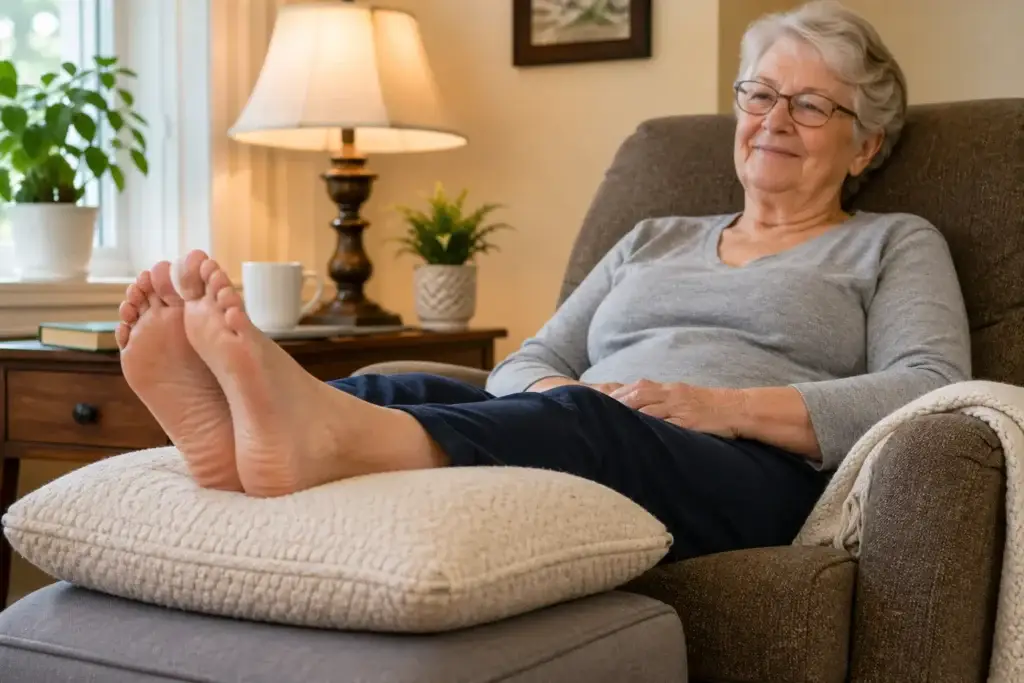
2. Elevating the feet when resting
3. Wearing properly fitting footwear
- Adequate toe space
- Proper arch support
- Non-restrictive socks
4. Maintaining skin and nail care
- Keeping feet clean and dry
- Moisturizing dry skin (avoiding areas between toes)
- Trimming nails carefully
5. Staying hydrated
Signs and Symptoms to Pay Attention To
- Persistent cold feet
- Numbness or tingling
- Swelling in the feet or ankles
- Skin colour changes (pale, bluish, or reddish tones)
- Slow-healing cuts or wounds
These signs do not necessarily indicate a serious issue, but they should be evaluated by a qualified healthcare professional, especially if they are ongoing or worsening.
When Professional Foot Care May Help
In some cases, individuals may need additional support beyond daily habits. Foot care services can play a role in maintaining comfort and monitoring changes over time.
Clinic foot care
In a clinical setting, foot care nurses can provide routine care such as nail trimming and skin assessment in a clean, controlled environment.
Home and mobile foot care
For individuals with mobility challenges, receiving care at home can make it easier to stay consistent with foot health routines.
Facility foot care
Residents in care facilities may benefit from scheduled foot care visits that support comfort and reduce the risk of complications.
These services do not replace medical care but can complement overall health management.
Common Misconceptions About Circulation
There are several misunderstandings about how to Improve Foot Circulation With Simple Habits.
“Only exercise improves circulation”
While exercise is helpful, small movements throughout the day can also support blood flow. Even gentle activity has value.
“Cold feet always mean poor circulation”
Cold feet can have many causes, including environmental temperature. Persistent symptoms should be assessed rather than assumed.
“Tight socks improve support”
Compression garments may be recommended in some cases, but tight everyday socks can restrict circulation if not properly fitted.
Professional Guidance and Support
A healthcare provider or foot care nurse can help assess individual needs and identify factors that may be affecting circulation. While general habits can help many people Improve Foot Circulation With Simple Habits, personalized assessment is important when symptoms are present.
- Observing skin condition and nail health
- Identifying pressure areas or footwear concerns
- Recommending appropriate foot care routines
If there are concerns about circulation, underlying health conditions should always be evaluated by a qualified healthcare professional.
Key Takeaways
- Many people can Improve Foot Circulation With Simple Habits through daily movement and proper foot care
- Small actions like stretching, hydration, and proper footwear can support circulation
- Changes in sensation, colour, or healing should be assessed professionally
- Foot care services can support comfort and routine maintenance
- Individual needs vary, and professional guidance is important when concerns arise
Closing
Learning to Improve Foot Circulation With Simple Habits can be a helpful part of maintaining overall foot health. Consistent, simple actions often make a meaningful difference over time. For any ongoing concerns, changes in symptoms, or questions about foot health, seeking assessment from a qualified healthcare professional is always recommended.