
Compression Socks: Benefits and Who Needs Them
Compression Socks: Benefits and Who Needs Them

- AFCN Foot Care Team
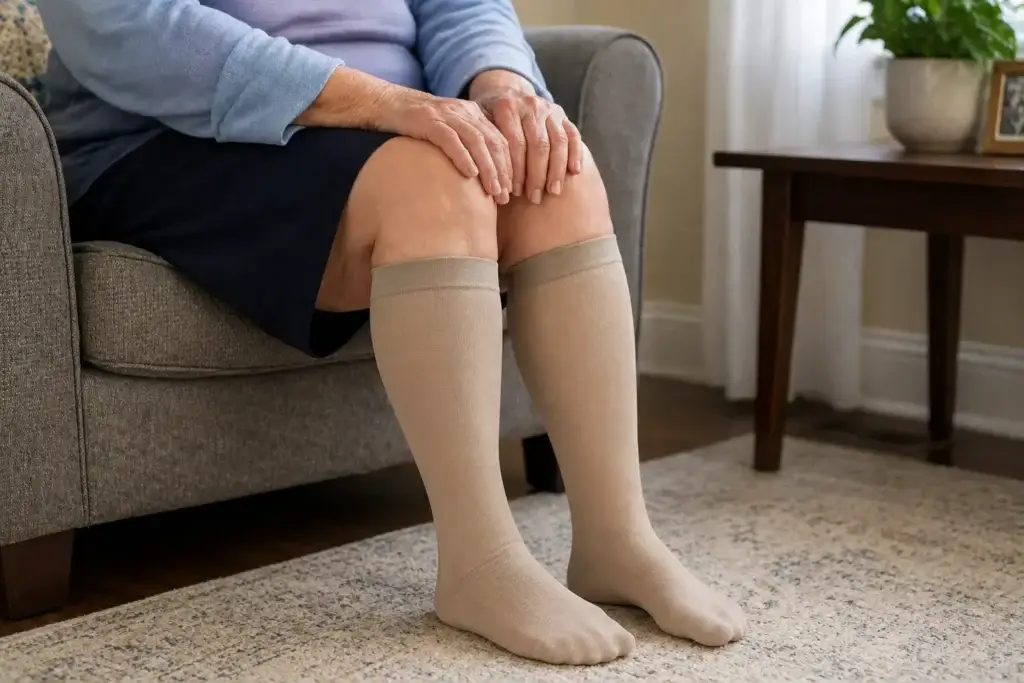
Compression Socks: Benefits and Who Needs Them is a common topic for individuals looking to support leg comfort, circulation, and overall foot health. Many people across Canada, including older adults and those with mobility challenges, explore compression socks as part of their daily routine.
Understanding how compression socks work and who may benefit from them can help individuals make informed decisions. While they are widely available, they are not one-size-fits-all, and proper use matters for both comfort and safety.
Understanding Compression Socks: Benefits and Who Needs Them
Compression Socks: Benefits and Who Needs Them begins with a simple concept: these socks are designed to apply gentle, graduated pressure to the legs and feet. This pressure is typically strongest at the ankle and gradually decreases up the leg.
Key Definitions
- Graduated compression: Pressure that is higher at the ankle and decreases upward
- Circulation support: Helps assist blood flow back toward the heart
- Edema: Swelling caused by fluid buildup, often in the lower legs
Compression socks come in different levels of pressure, often measured in millimetres of mercury (mmHg). Lower levels are typically used for general comfort, while higher levels may be recommended in specific clinical contexts.
How Compression Socks Work
To understand Compression Socks: Benefits and Who Needs Them, it helps to look at how they function in everyday use.
When a person is sitting or standing for long periods, blood can pool in the lower legs. Compression socks provide gentle pressure that can:
- Support venous blood flow
- Reduce mild swelling
- Improve overall leg comfort during daily activities
This can be particularly relevant for individuals who spend extended time on their feet or seated, such as during travel or desk work.
Practical Considerations for Everyday Use
When exploring Compression Socks: Benefits and Who Needs Them, it is important to consider how they fit into daily routines.
Who May Consider Compression Socks
- Older adults experiencing mild leg fatigue
- Individuals with limited mobility
- People who sit or stand for extended periods
- Travellers on long flights or car rides
- Those experiencing mild swelling in the lower legs
General Use Tips
- Ensure proper fit — socks should feel snug but not painful
- Put them on in the morning when swelling is minimal
- Avoid rolling or folding the top band
- Remove them if discomfort, numbness, or skin irritation occurs
When to Seek Professional Assessment
- Persistent swelling in one or both legs
- Pain, redness, or warmth in the calf
- Open wounds or skin breakdown
- Circulation concerns such as cold or discoloured toes
Service Context in Foot Care
Understanding Compression Socks: Benefits and Who Needs Them can also be helpful when considering professional foot care services.
Clinic Foot Care
- Safe nail and skin care
- Monitoring for pressure areas or irritation from socks
- Education on proper use of compression garments
Facility Foot Care
- Observe changes in swelling or skin integrity
- Support safe daily routines
- Ensure comfort and proper fit of socks or footwear
Common Misconceptions
There are several misunderstandings related to Compression Socks: Benefits and Who Needs Them.
Misconception 1: Compression socks are only for medical conditions
Misconception 2: Tighter is always better
Misconception 3: Anyone can use them without consideration
Compression socks may not be suitable for individuals with certain circulation concerns. This is why assessment can be important in some cases.
Misconception 4: They replace professional care
Professional Guidance and Considerations
Compression Socks: Benefits and Who Needs Them should always be understood as general information rather than individualized advice.
A qualified healthcare professional, such as a foot care nurse, may consider:
- Skin condition and integrity
- Circulation status
- Foot shape and sizing needs
- Ability to safely apply and remove socks
In some cases, improper use of compression socks can lead to issues such as skin irritation or pressure areas. This is particularly relevant for individuals with reduced sensation or fragile skin.
Professional guidance can help ensure that any supportive products are used safely and appropriately.
Key Takeaways
- Compression Socks: Benefits and Who Needs Them focuses on circulation support and leg comfort
- These socks apply graduated pressure, strongest at the ankle
- They may be helpful for people with prolonged sitting or standing routines
- Proper fit and appropriate use are important for safety
- Certain symptoms require assessment by a qualified healthcare professional
Closing Statement
Compression Socks: Benefits and Who Needs Them is an important topic for individuals seeking to better understand everyday foot and leg health. While compression socks can play a supportive role, they are most effective when used thoughtfully and, when needed, with guidance from a qualified healthcare professional.