
Step by Step: The Daily Foot Care Checklist That Protects Your Feet
Step by Step: The Daily Foot Care Checklist That Protects Your Feet

- AFCN Foot Care Team
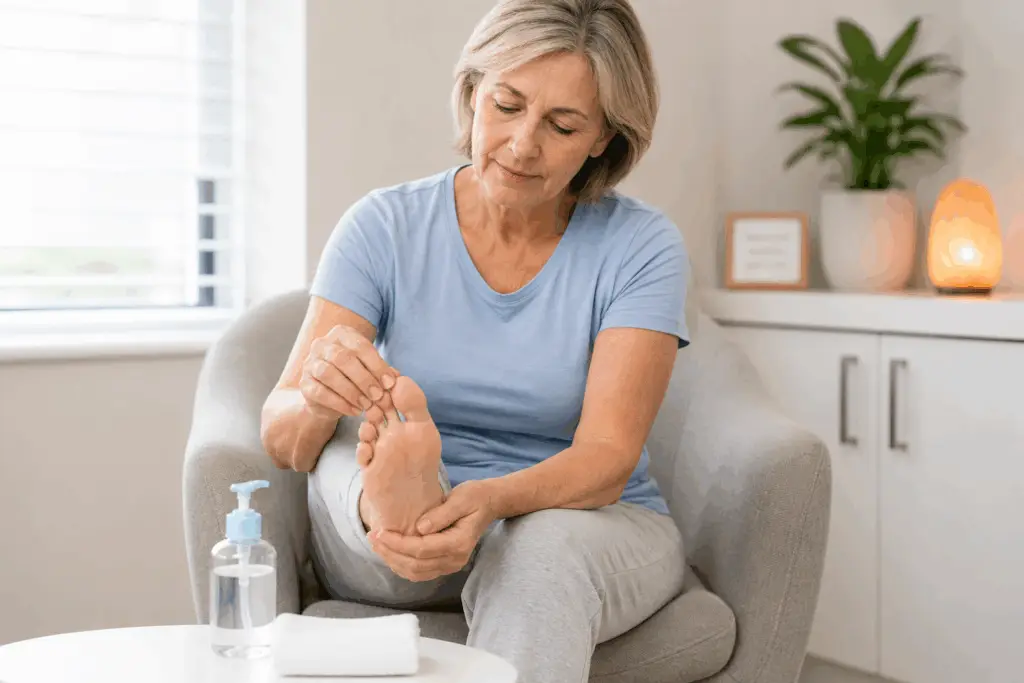
Your feet work hard every day, yet they are often the most overlooked part of the body. A simple daily foot care routine can play a critical role in preventing infections, pain, mobility issues, and serious complications—especially for older adults, athletes, and people with diabetes or circulation problems.
This evidence-based daily foot care checklist is designed to keep your feet healthy, resilient, and problem-free.
Why Daily Foot Care Matters
Feet contain 26 bones, more than 100 muscles, tendons, and ligaments, and a dense network of nerves and blood vessels. Daily care helps: – Detect problems early – Reduce infection risk – Maintain skin integrity – Support balance and mobility – Prevent ulcers and chronic wounds
Clinical guidelines consistently emphasize daily foot inspection and hygiene as a cornerstone of preventive foot health.
The Daily Foot Care Checklist
1. Inspect Your Feet Thoroughly
Check the tops, soles, heels, sides, and between the toes every day. Look for: – Cuts, cracks, or blisters – Redness, swelling, or bruising – Calluses or corns – Changes in skin color or temperature – Nail changes or signs of infection
Using a mirror or asking for help is recommended if bending or vision is limited.
2. Wash Feet Gently Every Day
Clean your feet daily using warm (not hot) water and mild soap. Avoid soaking unless specifically advised by a healthcare professional, as prolonged soaking can dry out the skin and increase infection risk.
Dry feet completely, especially between the toes, to prevent fungal growth.
3. Moisturize—But Skip Between the Toes
Apply a fragrance-free moisturizer to the tops and bottoms of your feet to prevent dryness and cracking. Do not apply lotion between the toes, as excess moisture in these areas can promote fungal infections.
4. Check Skin Temperature and Sensation
Notice whether your feet feel unusually cold, hot, numb, or tingly. Loss of sensation or persistent temperature changes may indicate nerve or circulation problems that require professional evaluation.
5. Trim Toenails Safely
Toenails should be trimmed straight across and filed smooth to prevent ingrown nails. Nails should be cut when they are dry and firm. Avoid cutting nails too short or digging into the corners.
Individuals with diabetes, thickened nails, or limited vision should consider professional nail care.
6. Wear Clean, Properly Fitted Socks
Choose clean socks daily that: – Fit well without tight elastic bands – Wick moisture away from the skin – Have smooth seams to reduce friction
Socks play an important role in protecting skin and regulating moisture.
7. Choose Supportive Footwear
Before putting on shoes, check inside for debris, rough seams, or foreign objects. Shoes should: – Fit properly with enough toe room – Provide adequate arch and heel support – Protect feet from pressure and friction
Poorly fitting footwear is a leading cause of blisters, calluses, and foot wounds.
8. Keep Feet Moving
Movement promotes circulation. Gentle stretching, walking, or ankle rotations throughout the day help support blood flow and joint mobility, particularly for individuals who sit or stand for long periods.
Weekly and As-Needed Foot Care Extras
In addition to daily care, consider: – Lightly filing calluses (never cutting them) – Replacing worn-out shoes – Scheduling routine professional foot exams – Addressing pain or skin changes promptly
When to Seek Professional Foot Care
You should consult a qualified foot care professional if you notice: – Non-healing cuts or sores – Signs of infection (redness, warmth, drainage) – Sudden pain or swelling – Thickened, discolored, or painful nails – Loss of sensation or burning pain
Early intervention is key to preventing serious complications.
The Bottom Line
Daily foot care is not complicated—but it is powerful. A few intentional minutes each day can prevent months or years of discomfort and medical treatment.
Treat your feet as an essential part of your overall health, not an afterthought.